KOUMES
Command-line agent is the most effective way to use an LLM. At the same time it suffers from one flaw - we don't really know what it's doing where, and neither the command-line nor existing software helps much with that. So you probably work the way this picture shows:
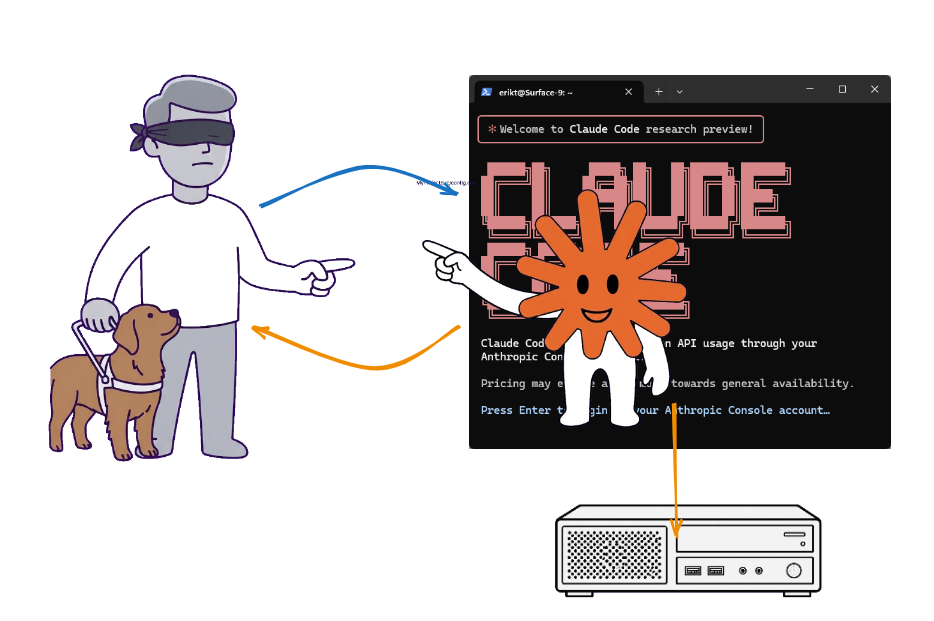
That's the reason program Koumes came into being. Or rather, my Claude Code wrote it.
Koumes is a browser of your files and a launcher of applications - one your AI command-line agent can see into as well. Assumed here is Claude Code. Koumes is currently written in Python, fully open. Feel free to modify it with the help of Claude. A new one Claude will write for you in about two days. - I also have a oneshot directive planned. That's then an hour of work for Claude to code it up again from the directive.
Koumes is nothing else than an internet browser with internet access forbidden. That's why it can safely and without browser obstructions open files and at the same time use the whole web technology to work with them.
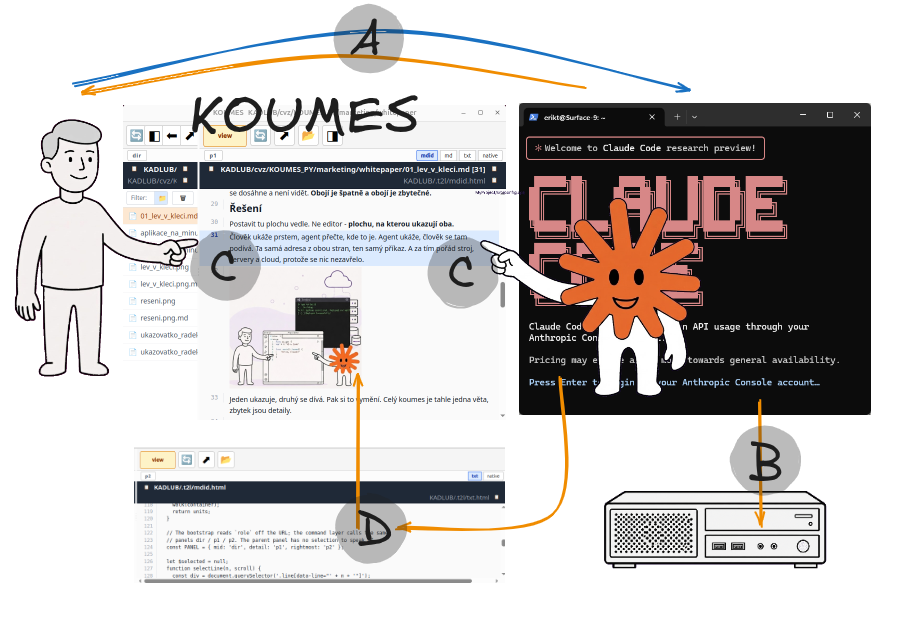
So what's it about. We still have (A) and (B). That's your dialog with Claude Code and its work with the system.
On top of that there is (C-C). That's Koumes. Koumes is an application that both of you can enter. You see and click there. Claude sends its commands there - both for changes, and to read what's there.
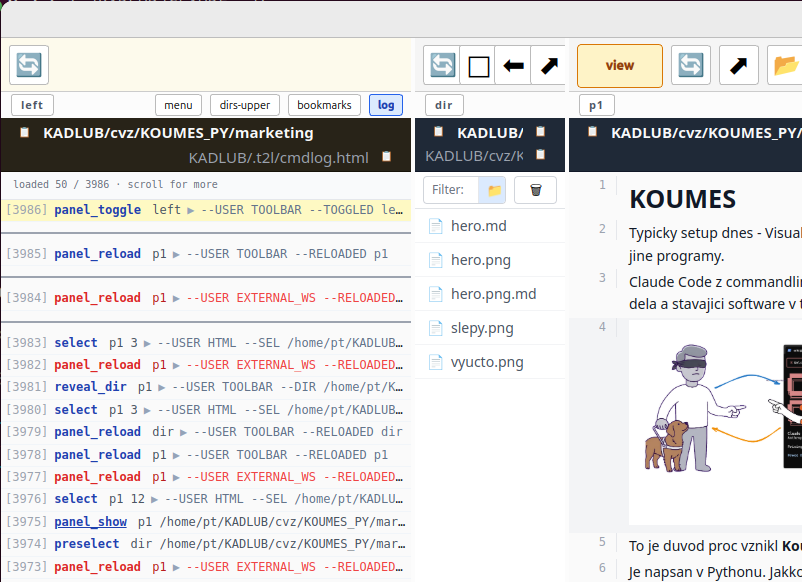
An important thing. The commands are exactly the same. The same command is carried out by you and by Claude. Take a look at the following picture. The red ones were made by Claude, the blue ones by me with mouse clicks.
But now something else. That program for collaboration over text was written by Claude itself. In a quarter of an hour, briefing included. That's the (D). And it will write any other program the same way. In the picture ahead is, for example, the split of a boat trip cost between four people. Each pays something, 2 currencies. Used to be a spreadsheet. Half a day of wrestling to make it compute. Half a day of entering and cleaning items.
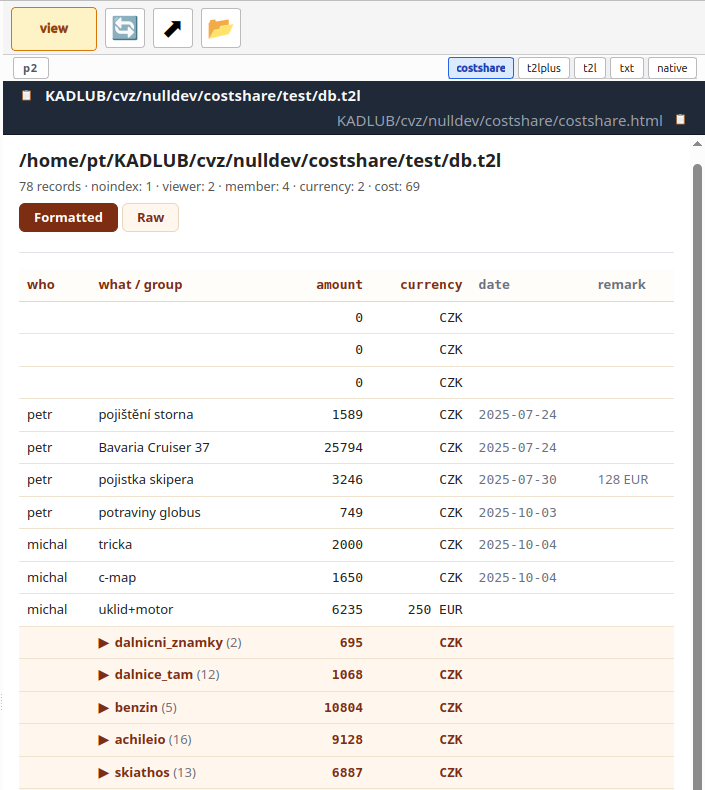
Now the program for Koumes - a quarter of an hour, copy from bank accounting. Claude fills in the data (B) - another quarter of an hour. Done.
The (B) is fundamental. Older software contained lots of dialogs for data entry. Forget it. That's now done by Claude Code. Verification and small corrections, that's then (C).
Koumes is thus really a framework for writing and running programs in html.
Focus on the dark line in the accounting. That second line is the program that Claude wrote for you to do the accounting. The first ones are then the data the accounting writes into. The data the program processes and Claude writes looks something like this:
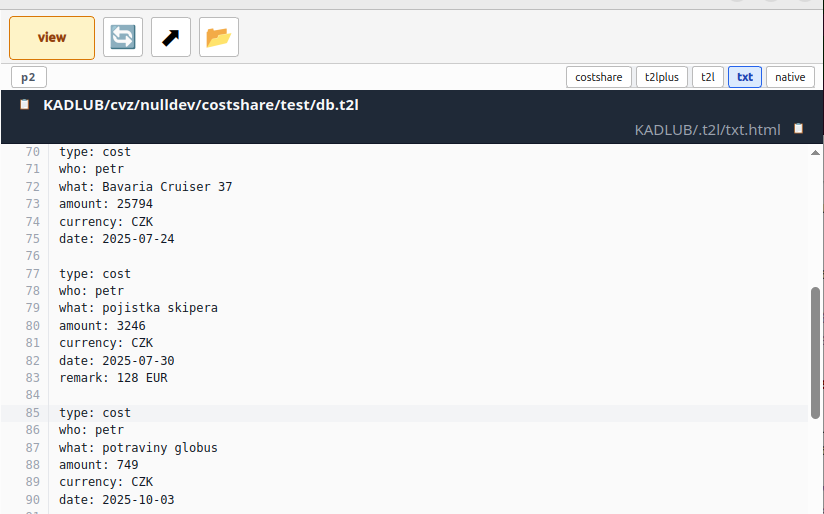
We already have the md editing. We have money-split computation. We have everything that used to be inside the Office package. Claude produced it for us in half an hour and does most of the work with it for us. Including a nice polishing of the resulting document, conversion to pdf, and so on.
If you want that accounting in a shared database, then converting it to the db form takes a single sentence.
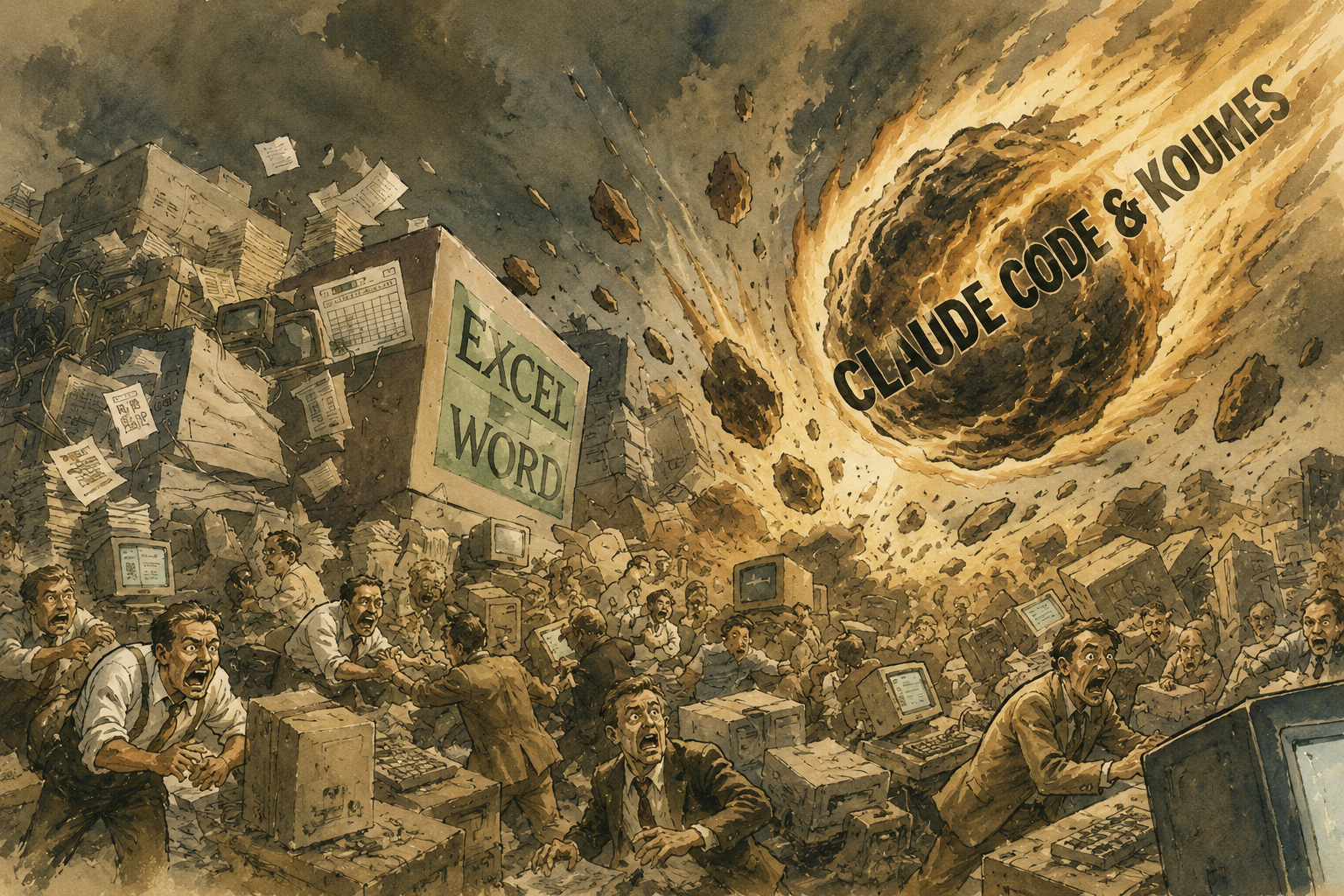
Welcome to the new world. Dinosaurs are still grazing, but the meteor has already landed and is spreading destruction.
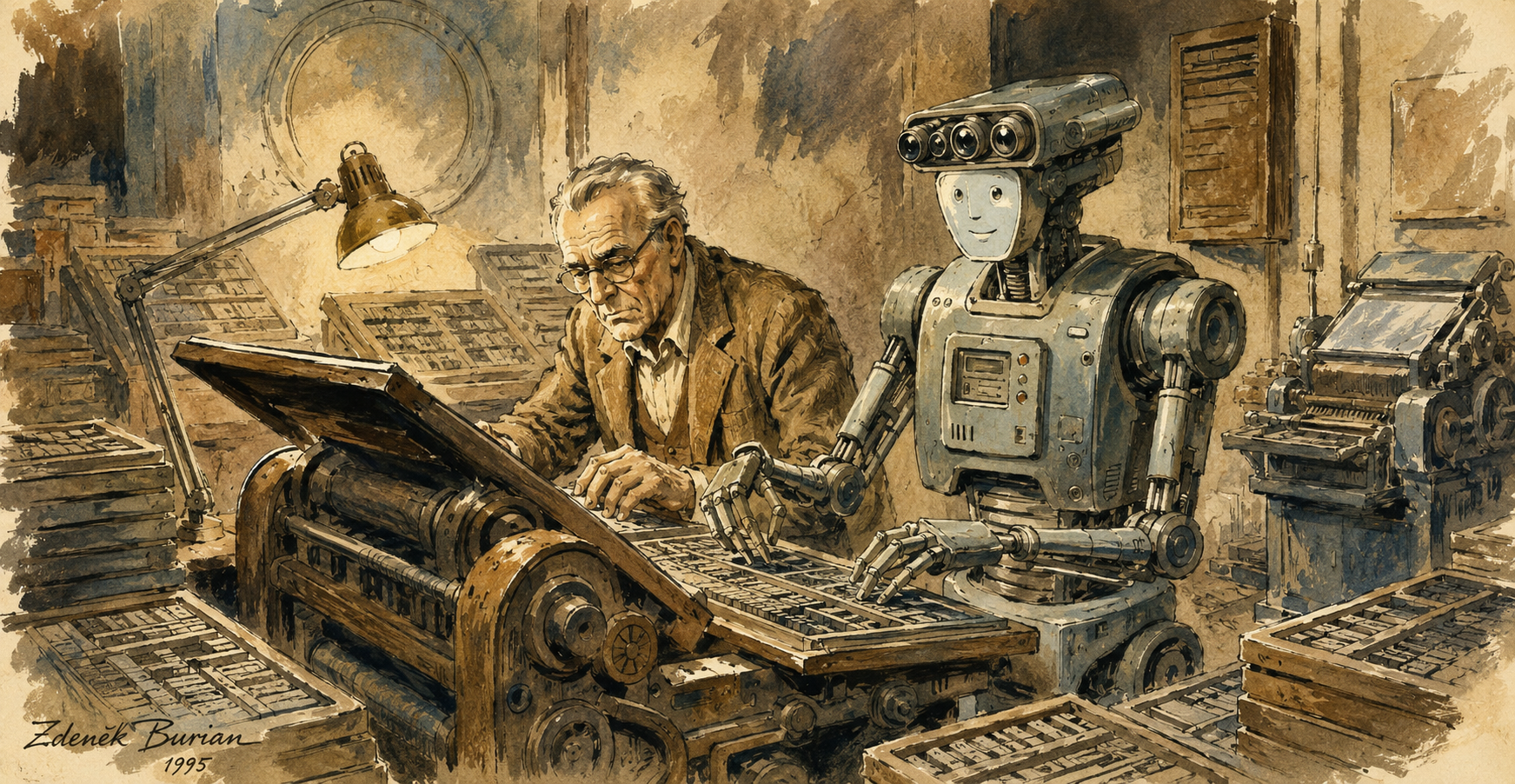
Koumes is the Czech name of a robot from an Asimov story, hired by a university to proofread galley proofs. It reads the whole print run and returns it corrected. And the koumes.com domain was, by some improbable coincidence, available.
Koumes is a bit more than a middleman. It's also about how it stores data, how it picks html for viewing, how Claude indexes that content, and so on. You'll learn all this in the manual after installation, or in further articles.